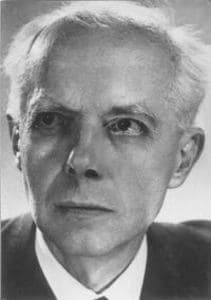
Paul Arma, born in Budapest in 1905, pianist and composer, studied the piano at the Budapest Academy of Music with Bartók (1920 - 1924), whose Iove for folksong he kindled. After concert and lecture tours in Europe and the USA, he settled in Germany in 1931 and led the musical activities at the Dessau Bauhaus. In 1933 he went to Paris where he carried out a variety of musical tasks, so he made that his permanent home.
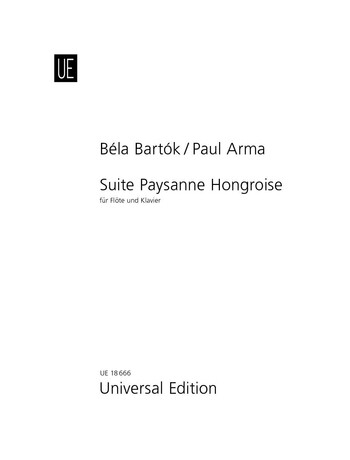
In 1952 Paul Arma arranged a Suite Paysanne Hongroise for flute and piano, based on the 15 Hungarian Peasant Songs for piano by Béla Bartók which was followed by a version for flute and chamber orchestra about 1964 (the performance material of which is available on hire). The Suite Paysanne Hongroise, a transcription much performed, was first published in 1956 by Universal Edition and has been incorporated into the Universal Querflöten Edition.
Instrumentation:
for flute and piano Der 1905 in Budapest geborene Pianist und Komponist Paul Arma studierte von 1920 - 1924 an der dortigen Musikakademie u. a. bei Béla Bartók Klavier, dessen Liebe zur ungarischen Folklore er teilte. Nach Reisen durch Europa und die USA ließ er sich in Deutschland nieder und leitete 1931 die musikalischen Aktivitäten am Dessauer Bauhaus. 1933 emigrierte er dann nach Paris, das ihm mit vielfältigen musikalischen Aufgaben eine neue Heimat bot. 1952 stellte Paul Arma aus den 15 ungarischen Bauernliedern für Klavier von Béla Bartók (UE 6370) eine Suite Paysanne Hongroise für Flöte und Klavier zusammen, der er um 1964 eine Version für Flöte und Kammerorchester folgen ließ (Aufführungsmaterial leihweise). Die 1956 erstmals bei der Universal Edition erschienene und viel gespielte Transkription wurde in die Universal Querflöten Edition übernommen. Schwierigkeitsgrad: 2-3
Inhaltsverzeichnis
Chants populaires tristes (1-4) · Scherzo · Vieilles danses (1-9)