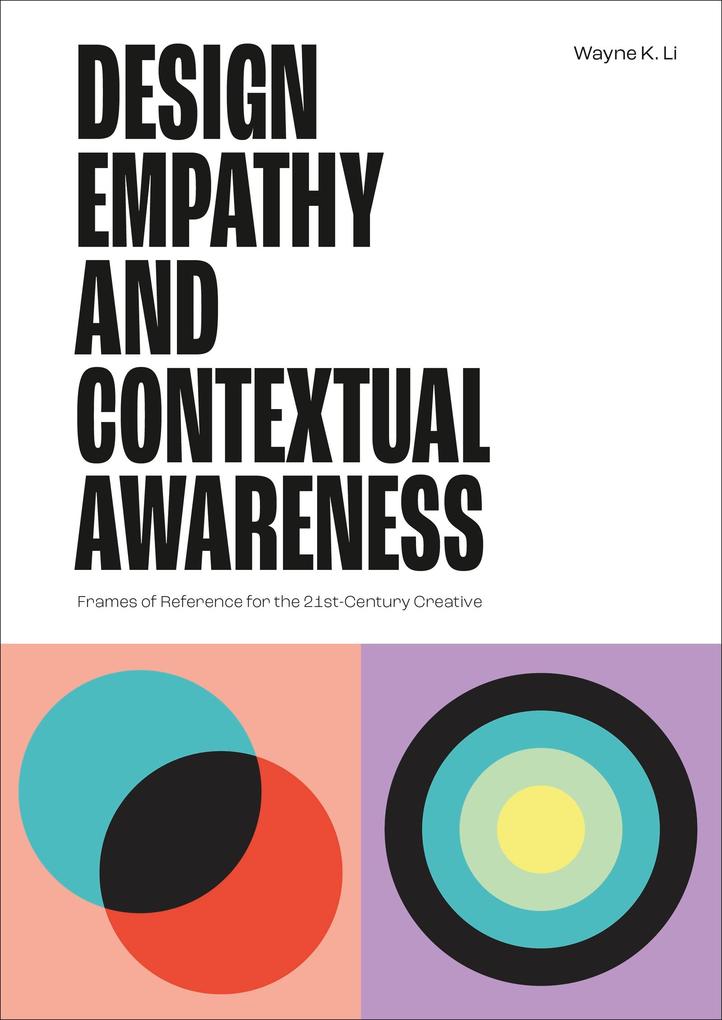
Der leicht zugängliche Text stellt Design weder als eine handwerkliche Fähigkeit noch als eine Übung in persönlicher kreativer Vision dar, sondern vielmehr als die Anwendung verschiedener Denkweisen und Praktiken, die um einen Prozess wechselnder Frames herum aufgebaut sind. Neben der Vermittlung von Theorie und Prozessen bietet dieses Buch auch reale Geschäftsbeispiele und anwendbare Vorlagen, die Designer*innen dabei helfen, ihr Einfühlungsvermögen und ihr kontextbezogenes Bewusstsein zu schärfen.
Inhaltsverzeichnis
Introduction
A Quick Case Study
About this Book
01 Laying a Foundation: Design as a Whole Brain Activity
1.1 Neuroscience and Business
1.2 What We Learn and How we Think
1.3 Frames of Mind & Frames of Meaning
1.4 Design Process
02 Design Behaviors
2.1 Empathy: Cognitive, Emotive and Compassionate Concern
2.2 Contextual Awareness
2.3 Creative Craft
2.4 Rapid Iteration
2.5 Entrepreneurial Sustainability
03 Empathy: Cognitive, Emotive and Compassionate Concern
3.1 Needs vs. Solutions: Reframing around People
3.2 Cognitive Empathy and Positionality
3.3 Emotional Empathy: Cultural Transmission
3.4 Compassionate Concern: Method Acting for Design
3.5 Narratives and Interviewing
04 Contextural Awareness
4.1 Expanding your Frame of View
4.2 Trends, Technology and Culture
4.3 Organizing Human Needs
4.4 Mapping and Timelines
4.5 Design and Business Strategy
Conclusion
Cultivating a Holistic Approach
Further reading and resources
Index
Credits and acknowledgments